Friday, 7 May 2010

Senmaida hebi

"Senmaida are a feature of remote areas of Japan that used to be common, but are now increasingly rare since so many of them have been abandoned and have reverted to forests or used for orchards or for crops less labour intensive than rice. A senmaida landscape is exceptionally beautiful, the first time it comes into view it takes your breath away. You can take good photos, but no photo can ever quite capture the scale, the intricacy, or the rustic charm of an living yet ageless landscape."

This description comes from the superbly informative website ( http://www.yamasa.org/japan/english/destinations/aichi/horai_senmaida.html ) of my language school.

Last summer, on the northern coast of the Noto Hanto peninsula, I took a bus from the town of Wajima out to one of the most famous examples of senmaida ('1000 rice paddies'). The following images perhaps serve to confirm that the camera cannot do the landscape justice.


Here, not for the first time in Japan, I saw a small snake.


During Golden Week, I also visited the area around Kanaya, famous for its tea (Shizuoka's green tea is the most famous in Japan) and wasabi. There's a particularly attractive stretch of the JR Tokaido line, east of Kanaya, which is flanked on both sides by intricate senmaida-like tea fields. 

Hillside overlooking Shizuoka. ('Shizuoka Aiport' is close too ... but mercifully you won't hear many planes.)


And, here on a well-preserved stretch of the old Tokaido road, what did we see? Again, a snake. Snow came close to stepping on it.


This time, a large one: 2.5-3m, we estimate. It unhurriedly eased itself off the path and into a hole in the stone wall.

As formidable as they may look, these snakes are harmless. (There is only one venomous snake in Japan, a non-aggressive adder which also poses little risk.) But from the look on Snow's face, at the time, you wouldn't have thought so.
Sakura ebi


Does deep fried shrimp taste any different than usual when eaten on Monday, 3rd May? The queue I'm in seems to think so. Today, the masses, mainly locals, I'm told, have descended upon this fishing port to binge on pink prawn fritters. It's the day of Yui's annual matsuri, a festival which signals the beginning of the sakura ebi season. 

The queue stretches out before us. Even by 9 a.m., the sun is beating down. Naively, I had not anticipated such a wait but it comes as no surprise for Snow and her family, who split into two groups, with her mother and sister lining up for the fresh, uncooked catch.


In the intense sunlight, without a hat, I'm at risk of becoming a pink prawn too. But no pain, no gain. (Is this karma for my Krispy Kreme post?)

"They better taste good", I say, give or take a few moody expletives. Snow seems to think it's worth the wait though. "Here, they're fresh" she says. I'm unconvinced, and can well imagine there's some restaurant in the vicinity of Shizuoka where, with a little planning, one could sit down to eat the same in less time than we spend waiting in line. But here, only I think such thoughts. They're into queueing, and don't reason in terms of wasted time.

A whopping ninety minutes later, and we're in. It's a frying frenzy of industrial proportions, with the fishermens' wives hard at work.


At 200 yen apiece, Snow buys five fritters. Between the two of us, that's a total of 30 minutes' waiting time per tenpura. "They better taste good", I say, give or take even more expletives, which her mother and sister - having now rendezvous-ed with us - won't understand. We eat in the railway underpass, sheltered from the sun.


Surprised that we hadn't raided the stall and bought as much as we could carry, I'm a little confused. Is this all we came for? Snow then explains that a limit of six fritters per group is in place. So why didn't we each purchase six? I suggest the long wait justified the maximum return. But she doesn't think like this. The calculating gaijin, with eyes larger than his stomach, inhabits a different world.

That evening, Snow's mother fries the raw ebi she bought at Yui. It tastes just as good. And here we get to eat them with wasabi mayonnaise. Washed down with a beer. Without queueing.

Saturday, 1 May 2010

A Springtime playlist, Okazaki

1 Ulrich Schnauss

I can only do Japanese homework to instrumentals so I’ve been listening to a lot of Plaid, Boards of Canada and Ulrich Schnauss. I saw him supporting Chapterhouse (who I really don’t get but he was dancing like a nutter to them) at the Live 11 Bar in Osaka a few weeks back. Each of his three albums, shortsightedly written off as MOR electronica, are masterpieces. Suddenly The Trees are Giving Way: http://www.youtube.com/watch?v=-Cmq2VSkpQ0 . No, he doesn't sound like Enya.


2 Now streaming pre-release from the NYT website, The National’s new album - 'High Violet'. On a first listen, the initial tracks sound over-instrumentated, too Arcade Fire, but their albums are always deceptive growers which turn better than good. As at 1 May 2010, you could still listen to ‘Afraid of Everything’, an early stand-out from High Violet. They remind me of Furniture, the Great British unknowns of the late 80s whose corner I fought at grammar school whilst everyone else were into The Mission (etc). http://www.nytimes.com/2010/04/25/magazine/25national-t.html?pagewanted=5 . If NYT’s site has since been updated, you can hear it here: http://www.youtube.com/watch?v=6Ktu_yr4v5k


3 The best pop record single of 2009, I still think: http://www.youtube.com/watch?v=xmfQfkzL0-k
(Royksopp – Happy up Here). But the second track and single off Junior, The Girl and the Robot, runs it close (http://www.youtube.com/watch?v=SfckrfOYAy4&feature=related ). Alas, after Tracks 1 and 2, the album crashes.


4 New Interpol album on the way. http://www.youtube.com/watch?v=VakqM_mJMqY With an eye on my return to London, I hope they delay touring before the Summer. I liked ‘Our Love to Admire’, which Pitchfork ( http://pitchfork.com/reviews/albums/10413-our-love-to-admire/ ) panned, and it sounded especially good live. For the record, the comparisons with Joy Division are way off the mark and the Editors are cheap (English) imitators.


5 If 4. seems a little epic, and one-paced, the Julian Plenti (Paul Banks of Interpol) solo album sailed pretty much beneath the radar but contained some edgy (and patchy) stuff. http://www.youtube.com/watch?v=Gt40__1OlqU&a=Rwk24M38PR0&playnext_from=ML


6 The most talented solo female artist out there, yet ignored by the British Music Press. Oh dear, what happened to Emilie Simon? Her latest stuff was Kate Bush karaoke.

I used to played her songs to my more mature French classes. http://www.youtube.com/watch?v=Qf5olM0v9-w Some loved her; others found her annoying. One of them honestly asked “does she actually say “Don’t f**k me” in that song"? (No she doesn’t.) http://www.youtube.com/watch?v=_3koM_0VdVI


7. Susume Yokota. Back to the instrumentals. More kanji benkyou then. Japan’s main man for ambient. This (kodomotachi - http://www.youtube.com/watch?v=2GemQVvqxBE&feature=PlayList&p=02A959BEDF48A847&playnext_from=PL&playnext=1&index=3 ) is one of the highlights from Sakura but I preferred Love or Die. Someone’s paired it on Youtube with extracts from ‘Night of the Hunter’ starring Robert Mitchum, a film which also inspired music by Shack and (the late, legendary) David McComb.

[Talking of whom, I missed the Triffids reformation at the Barbican http://www.safeconcerts.com/events/the-triffids-barbican-2010.asp since I’m in Japan, although I’ve got mixed feelings about that particular venture, anyway.]


8 I played their album ‘23’ all through January. Not whilst doing Japanese homework. Blonde Redhead – The Dress. Sound to me like Depeche Mode in their pomp – I mean, before their decline - fronted by a scary, ‘elsewhere’, possessed Japanese who, the lyrics and interviews tell us, likes riding horses. Awesome live. http://www.youtube.com/watch?v=vC4whWGWOXA&feature=related Or http://www.youtube.com/watch?v=9sVBM1nXBa8


9 Still too good to be massive, The Clientele. http://www.youtube.com/watch?v=SRssVlZwPFk . Not background music so I rarely listen to this, officially the Greatest Band in the World (according to English language polls carried out in my street this morning).


10 A classic from the last few years which sounds like a cover version of a classic (which it isn't). http://www.youtube.com/watch?v=n6HWbtV5J1w (Excuse the whistling, not on the original from Back Numbers).

I still wear my Luna (RIP) T-shirt. This might just be risque in Japan, where Luna is a brand of sanitary towel. I even saw a ‘pink bar’ called Luna Sherry near Shizuoka once.

Haunted house box, Kobe


Thank you to Mia-san, Toyota, for her hospitality and research. (Excuse the photography.)
I have now spent a cumulative total of six months in Japan, and never had an argument. Neither have I witnessed one. The closest I have come was a dirty look when I cut across a cyclist's path.

One early morning in Fukuoka, in summer 2008, I did once arrive at the after-scene of a fight. Within a short while, no less than four police cars had arrived and the two - yes, only two - brawlers were arrested. This was the kind of thing which would have been ignored in Ealing Broadway, England, on a Friday night.

Why is day-to-day life so peaceful? In a society where agreement is the ideal, even expected, it seems that everyone is at pains to out-apologise one another, even when entirely devoid of blame. Take this experience with hotel staff, who will do their utmost to uphold a guest's honour: Two years ago, during summer, I returned to my hotel in Kumamoto, Kyushu, and asked mistakenly for what turned out to be the wrong room key number. Remembering I was a guest, the receptionist obliged yet, when I returned red-faced having entered another guest's room, she was profusely sorry. I had been badly let down.

This rejection of annoyance and negative vibes works like mind over matter. "I'm not going to look accusingly at that clumsy blonde gaijin cyclist, and somehow now the tension's diffused and forgotten." (Well, just the once, it didn't happen.) In Japan, how to react is an art - one which I'm far from having perfected - and feelings follow suit.

Does this mean that the Japanese are a polite people? Not necessarily. A people who go out of their way to help others? Again, no. This isn't Syria. A couple of months ago, I watched a blind man negotiate with some difficulty his way along station platforms and up escalators, without a single passenger offering assistance. At Okazaki station one Saturday evening, I also witnessed a quietly inebriated man pass out when stepping out from a train and crash head first on to the hard platform. (Japanese drunkards, inevitably male, can rarely be accused of outwardly anti-social behaviour though.) Noone rushed to help him up; people skirted around him, as he lay there after a shockingly violent fall. Another passenger heading up on the escalator was even recording it on his mobile phone. When finally helped up by two young Japanese, he had an appalling facial cut which would have called for medical attention, yet - regaining consciousness -what did he say? "gomennasai". ("Pardon me.")

What the Japanese do is give you space. No hassle, no hard sell, nothing in-your-face. (Unless its a hard pavement.) But once they've given you that space, they're going to think twice before re-entering it.
Taken for a ride


On a summer’s day, in a country where living space is relatively constrained, one might think that a day out at the park would provide respite from flashing lights, thuds and bleeps, animation, Japan. This is certainly true of many of Japan’s urban green spaces as well as, at first sight, Okazaki’s ‘South Park’, where I occasionally go for a run. Not at weekends, though. Across the small lake, there’s a mini-funfair, with rides and (of course, the ubiquitous) ferris wheel. It is truly a park of two halves.


I pity the parents. Even if they bring their children here for some fresh air and a walk in the woods, it’s likely that they’ll be digging into their pockets for something loud and plasticky too.

How about a shopping trip? Well, on the second floor of Wingtown, which is nothing more than a mini-mall, there are two separate arcades targeted exclusively at kids: the gaudy, noisy, flashing Nicopa, one of which – called Heartful Square – is an immense child-“friendly” games centre. I think of it as Pachinko for Beginners, Gambling for Boy Scouts. Addiction begins here, with a family outing, so lose yourself in the noise.


Heading back along to the Valor supermarket, at least here there’s the chance of a free ride: here you can pick up a colourful, cartoony shopping trolley to whizz your toddler around in. Everywhere you go, Japan is geared up for youthful escapism. For better or for worse, fantasy sits alongside the mundane.


There are days when I actually like the Japan that I have described above. But it's me that sounds a little hopeless today, isn't it?

Friday, 30 April 2010

Dogville (not the movie)


I’m not really 'into' dogs. As I type this, I can hear one barking. The one at Snow’s house (Taro-kun) is jumpy and scary, and has to be tied up when I visit. But I really hit it off with one last weekend. A kind Taiwanese girl from our class (let’s call her ‘Rabbit’) invited a few of us to her friend’s house in Toyota on the Saturday afternoon for sushi, beers and a round or two of Nintendo Wi. One of these video games involved throwing a フリスビー (furisubee) for a cute computerised dog to catch and return.


My teammate and I did the little trotting one proud, and we trounced our classmates with a few laser-guided throws. I suspect there are gameplayers out there who have bonded tamogochi-style with these animations. But rest assured: Mo-Kun (the one I “hit it off” with), as you can see from the photo below, is definitely an actual dog.


I expect the story of my linguistic boob when discussing this living, breathing woofer with our hosts to make a classmate’s website ( http://www.ettojapan.blogspot.com/ ) soon. You see, I thought we had found common ground: when told that Mo kun’s favourite thing was ‘sanpo’ (a walk), I agreed and said it was mine too. I had misheard: his favourite thing was, in fact, ‘sanpuru’ (dog biscuit samples).

The Japanese go to quite ridiculous lengths in lavishing affection on dogs, and the excitable Mo-kun is relatively unspoilt by the standards of his compatriots. And whilst inter-human relations in Japanese public places are rarely tactile (few kisses or embraces at the airport or railway station, for example), the tlc extended to their canine friends is anything but. They dress them and groom them and fuss over them, especially the small ugly ones. I’d say newborn babies get less attention.

In particular, dogs are the accessory of choice for the common Japanese phenomenon of ‘Girl Walking Alone in Park’. So much so that I recall reading somewhere that, for men looking to pick up Japanese, investment in a dog is a shrewd move. (I witnessed this only the other day in Osaka Park.) Dogs are innocuous talking points on which everyone can agree (“isn’t he cute?” etc) as a preamble to flirtation. There are other equally bland conversation-openers (notably the weather) but the advantage with the sweet, unpredictable dog is that it can sneak its owner through small gaps in the gender fence. Here, in the park, it is truly the (predatory) Man’s Best Friend.

Himeji Koen, early April 2010, “Check out that Bitch

It probably comes as no surprise, then, that in Japan, with its low birth rate, the whole dog ownership craze has spawned an immense (and, frankly, tasteless) side industry which must account for a significant proportion of average Japanese household expenditure. This industry seems to be doing its best to bring Crufts standards and glamour to the masses. Petside.com ( http://www.petside.com/petsideblog/2009/06/putting-on-the-dog-in-style-in.php ) reported last year that:

The number of pet dogs in Japan alone has reached an astounding 13 million or more over the past 10 years.

Of course this industry has attracted numbers of ancillary businesses, such as those specializing in dog sunglasses, doggie clothing, fancy collars and leashes, and any other product that you can imagine having to do to delight and dress up the canine species. Doggie day care centers and spas which provide the highest degree of pooch pampering are becoming popular with dog owners who wish to offer their pets the crème de la crème of canine care.

But can you believe that canine-centered restaurants are also opening their doors? Get this . . . these dog food franchise cafes are featuring the tops in canine cuisine. "Deco Dog Restaurant" is one of them. Their unique menu offers "sweet potato scones, chicken, cheese, vegetables and dog sweets" to tickle Fido's palate with these delectable treats. Trumping these offerings, some of these establishments also offer "doggie etiquette" and yoga classes as well.

For folks who live in apartments where dogs are not permitted, guess what? There are doggie rental services available so these folks can experience the pleasure of spending time with their favorite animal. Many of these agencies will even attempt to provide the renter's favorite breed as well. Rentals can range from several hours to many days. As of 2008 there were over 134 dog rental facilities open for business.”

If I had a dog, it wouldn't take me long to reach one of these places. As seems to be the case for most phenomena I consider iconic of modern Japanese life (e.g. Pachinko, 100-en stores), a short walk from my doorstep just around the corner from Wingtown brings me to what could easily be the archetype. Entering the street, I hear barking. Follow the sound and you realise that this isn’t just any other residential neighbourhood. It's the location of the grandiose-sounding IPC or ‘International Pet Culture General College’.


The IPC comprises (all written in English) the ‘Aichi Pet College’ , the Pet Groom Training Studio, ‘Studio Cut and Hotel Doggy’.


Uniformed staff head in and out, walking dogs at pace. Doggy-printed minibuses are parked out the front; they sometimes pass me on their rounds as I walk or cycle into school.


Do dogs humanise us? Or are we humanising dogs? And, if so, what next, I ask? Dog love hotels? Dog onsen? I wouldn’t bet against either existing already and, if indeed they do, can well imagine they’re queuing around the block.

Anyway, it being a pleasant day, I'm off to the park to play some frisbee. Who knows? I might get lucky and meet a dog.
Memories of Mr Dog-Biscuit, and Himeji (early April)


Early April 2005. We crossed paths just inside the Iranian border, shortly before re-entering Turkey. You walked the last mile to the border. I took the bus. (Economy-minded traveller that you were, you didn’t want to fork out the extra 10 pence.) You came from Chile, or Argentina I think. Looked a little bit like the hippy traveller, with your flip flops and unkempt hair. (I wonder what the well-groomed Persians made of your style.) Your name was Ricardo, or Carlos, I think. We got talking, spent the day in and around the border town of Dogubayazit (known to travellers as ‘Dog Biscuit’ ( http://en.wikipedia.org/wiki/Do%C4%9Fubeyaz%C4%B1t ), the scene of a bird flu outbreak a few years later and close to Mount Ararat where a group of Turkish Christian missionaries claimed this week to have discovered Noah’s Ark [note: they’re misled – it’s in Takayama]), visited the castle, ate a Turkish pizza, drank a beer, said our goodbyes, and lost touch.

Unless you just happen to be reading this. (Unlikely.) In which case I should tell you: there are two things for which I remember you well, the first of which still makes me chuckle.

There are countries where regular conversation with curious locals is to be expected, unavoidable, for backpackers. There are others where it is not. Japan falls firmly into the latter category. This is often regrettable since travel here without contacts can be quite an isolating experience. Few Japanese invade your (limited) space, even when you lower the drawbridge. They might want to, for all kinds of reasons, but rarely do so. Politeness, shyness, perceived language barriers – all factors which no doubt play a part. It’s not really a country where you are going to fill your address book unless you take some drastic action, e.g. tour with an obvious ‘talking point’ such as a cute dog peeking out of your backpack (see next post). Which I have not yet seen anyone do.

Countries such as Iran and eastern Turkey, where intrusion upon privacy is a relatively alien concept, lie on the other side of this spectrum. There, a raised drawbridge won't necessarily guarantee you peace in the moments when you’re just happy taking in the view from the bus window. (In which case take your pick of anti-social strategy: short, one word answers; look grumpy; allow personal hygiene standards to fall; feign that you don’t speak English etc.) This is perfectly illustrated by the experience ‘Ricardo’ - a bit of a ladies’ man, if I recall (of all places to meet one: Iran!) – shared with me in Dog Biscuit.

A local male student who had engaged Ricardo in conversation earlier that day had asked him, “Do you mind if I walk with you?”, and so they had ambled around the streets of this small town together. Approaching lunchtime, he had asked: ‘Do you mind if I talk with you whilst you eat?”. Again, no problem. Ricardo welcomed the company. A few hours and “Do you mind if..” questions later, Ricardo again did not mind talking with the student when, sightseeing concluded, he walked back to his hotel. Where Ricardo then said goodbye and that he had enjoyed the day. But his companion wasn’t relinquishing his grip quite so easily, wasn’t going anywhere. So Ricardo said something along the lines of “well, I’d like to read now”. The student’s reply: “Do you mind if I talk with you whilst you read?” By this stage, I guess you could hear the shudder of the drawbridge. He had had to become rather more abrupt, rude even. At which the student, having failed to take the hint before, got the message, and left.

At dinner that evening, what would have been his next “do you mind if I talk with you whilst you [ …]?” question, we wondered.

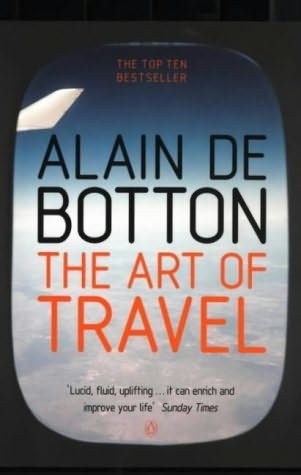
‘Ricardo’ never carried a guidebook, and it is for this that I also remember him. He may have travelled with a guitar but, when it came to sightseeing and touring, he made it up as he went along. No maps, no descriptions, no explanations. His beatnik style was to wander and stop when he found something interesting. He arrived in towns, and left them too, completely and possibly blissfully ignorant of their attractions. Ricardo even took some convincing to walk to Dog-Biscuit’s castle. (He’d make an interesting case study of the sort to be found in Alain de Botton’s ‘Art of Travel’).


[Highly debatable quote from Amazon review at http://www.amazon.co.uk/Art-Travel-Alain-Botton/dp/0140276629 : "If there are flaws in this, de Botton's latest and perhaps most readable book, they are the usual suspects: just occasionally the author comes across as a bit long-winded and self-regarding." But I would say that, wouldn't I?]

In my experience it is not uncommon - especially in the Third World - to meet backpackers who apparently delight in telling / asking you, openmouthed, “what, you didn’t go to…?” They want you to feel you have missed out. (They also tend to be less interested in the places you have visited.) Equally, there are those tourists for whom travel seems to be one long laborious mission to prove they have been .. wherever they have been. They will enjoy their holiday in retrospect, yet here and today their minds are on their photo album and the souvenir shops. (To a lesser or greater extent, I suspect many travellers can identify with this description – I, with my scrapbooks and.. blog posts, certainly do.) Anyway, into such company, I would gladly teleport Ricardo for the alternative view.

If by now this sounds like a ‘man crush’ (an expression which these days seems to go hand-in-hand with media coverage of Jose Mourinho), don't worry - it isn't. I just admired his rejection of the common affliction that is ‘Tourist’s Conscience’.  In this respect I am the anti-Ricardo, and often find myself wishing - invariably with hindsight - that I weren’t. When I have the opportunity to visit a site recommended in books or by others, I assume that I will never be here again. So I had better see it now. Even if I’m already burnt out by sightseeing or indifferent to its alleged attractions. In which case, it's as if I have to visit a place in order to realise it really wasn’t worth visiting, after all – and what I take from that visit is the knowledge of why (it isn’t).

So, is this why I am in Himeji, home to Japan’s most impressive castle, today? Staying in girly Kobe (famous for its beef, quality of life and the shortest skirts in Japan, although Matsumoto runs it close), it is the obvious day trip.

But I was never particularly excited by the prospect of coming here. I had seen its towers from the railway line on previous travels but never stopped off en route. Now, with a cheap, soon-to-expire railpass burning a hole in my pocket, it would seem foolish not to visit.

Even if I’m not especially interested in Restored Japanese Castles. From the inside, they all look pretty much the same, with the same staircases, the same displays of masks and swords. You’ve seen one, you’ve seen them all. (But I had to see them in order to realise this.) So, I wonder, is it fortunate or unfortunate that I saved the best castle in Japan till last?


I skirt around the park and admire Himeji-Jo from a distance. Even in poor weather, groups sit out under the sakura to take in a bit of o-hanami. I take a few photos. Box ticked. I’m not planning on hanging around for too long. The large crowds and queues from earlier in the day are slowly subsiding but the guides still suggest you need 2-3 hours to ‘do the castle justice’. I have more like one and a half. And I’m hungry. It’s 3 o'clock and I haven’t yet eaten.

I head next door where my guidebook tells me there is an excellent salt-water eel restaurant, ‘Kassui-ken’, set in a charming garden. In the back of my mind, this has been my destination. I have been looking forward to visiting here more than the monument itself. I should see the castle but I want to eat anago.


Looking out over koko-en (carp lake garden?), and without regretting my choice of entrance ticket for this afternoon, I realise that I will almost certainly never enter Himeji-Jo - not today, not ever - and tuck in. Like so many Japanese, I have opted to plan my itinerary around my stomach.

I eat quietly. And noone asks: “do you mind if I talk …?”.

Sunday, 25 April 2010

The film not even trainspotters want to see


We are now approaching Japanese Golden Week: five days of holiday ending on Children’s Day (5th May), a festival which I mentioned in an earlier post. I plan to lie low in Okazaki or Shizuoka during this period, when everyone will be on the move, touring and visiting, and trains and hotels will be fully booked.

A first ever trip to a Japanese cinema appeals, yet I read that Japan’s multiplexes are also likely to be packed. Indeed, the name ‘Golden Week’ is said to have originated from the Japanese film industry, which noticed a huge spike in ticket sales during these holidays (http://www.culturalsavvy.com/goldenweek.htm ).

What film should I opt for? I continue to try to keep abreast of releases back home via the currently intermittent Mayo / Kermode Friday afternoon BBC Radio 5 Live show, even if I don’t get to see the movies being discussed.

On last Friday's show, ‘the Good Doctor’ was discussing woeful English-to-French translations of film titles, taking contributions from listeners, and for the first time I emailed in a suggestion.

The film I had in mind was The Horse Whisperer, an adaptation from a novel, with a very literal title in French. That title does, however, have the merit of telling you what the film is about. Those who haven’t read the book, or seen the film, might well ask: is ‘The Horse Whisperer’ the story of a whispering horse, someone who just can’t stop whispering ‘horse’, ‘horse, ‘horse’ (etc) – and wouldn’t that be annoying? – or the tale of a man ‘who whispered in the ear of horses’. Well, that - 'L'Homme qui murmurait à l'oreille des chevaux' - is exactly how the film was marketed to French audiences. A film title unlikely to give rise to any 'money back' claims or - I suspect - fire the Gallic imagination.

Alas, the Mayo / Kermode wittertainment moved on to a different discussion concerning film taglines which state the obvious, and my email was not read out. (Which the reader might consider to be for the best, all things considered, even if ‘the man who whispered in the ear of horses’ is equally relevant to that subsequent topic, as it's a 24-carot example of stating the obvious, too.)

Now, talking of film titles lacking the X factor, one might expect that the Japanese film industry would be keeping potential blockbusters up its sleeve for the busy moviegoing period to come. (Which might explain Bandage’s [see previous post] earlier release.) So what’s this film poster that I just saw at my local ‘WingTown’ shopping centre?


That's right. ‘Railways’.


Just look at that poster.

As it’s in English, I guess that the whiff of dullness that surrounds (the title of) this film makes for an altogether more exotic scent in Japan. But have you ever seen a less inspiring name, and poster, for a movie in your life? (‘L’homme du train’? ‘The Postman’? Well, that was called ‘Il Postino’ when it appeared in English cinemas, which made it less humdrum.) I can’t even begin to imagine a plot synopsis but would like to hear Mr Kermode try.

What could it be about? ‘Waiting for Godot’ but minus the metaphysics, and with trains? You can see the trailer here, where it doesn’t look too bad at all: http://asianmediawiki.com/Railways_(2010-Japan) and http://www.railways-movie.jp/. But, despite the obviousness of the name, the poster gives few hints.

Come to think of it, the name ‘Wingtown’, where the book / record / entertainment media shop is called ‘Culture Resort Imagine’, wouldn’t be such a bad title for a film. No worse than Dogville, or Condorman, or Railways, at least.


I'd like to see it made by M Night Shyamalan, with Brian Blessed in the lead role.

 
And, thinking of taglines which state the obvious, here's one which springs to mind:

'Railways. Would you prefer to go Sleeper?''


(Note to bookies: odds on Best Foreign Film at 2011 Oscars?)